2. Indoor Air Quality (IAQ) and Indoor Air Pollution (IAP)
by Admin
Posted on 07-03-2025 10:40 AM

Simply put, indoor air pollution refers to any contamination of the air within a building. Pollutants are generally grouped into the following categories: molds, solvents, pesticides, smoke, pet dander, and gases. Most properties will suffer from indoor air pollution to some degree. The quality of your indoor air (iaq) is a measure of how the air inside of a building affects its occupants’ health and comfort.
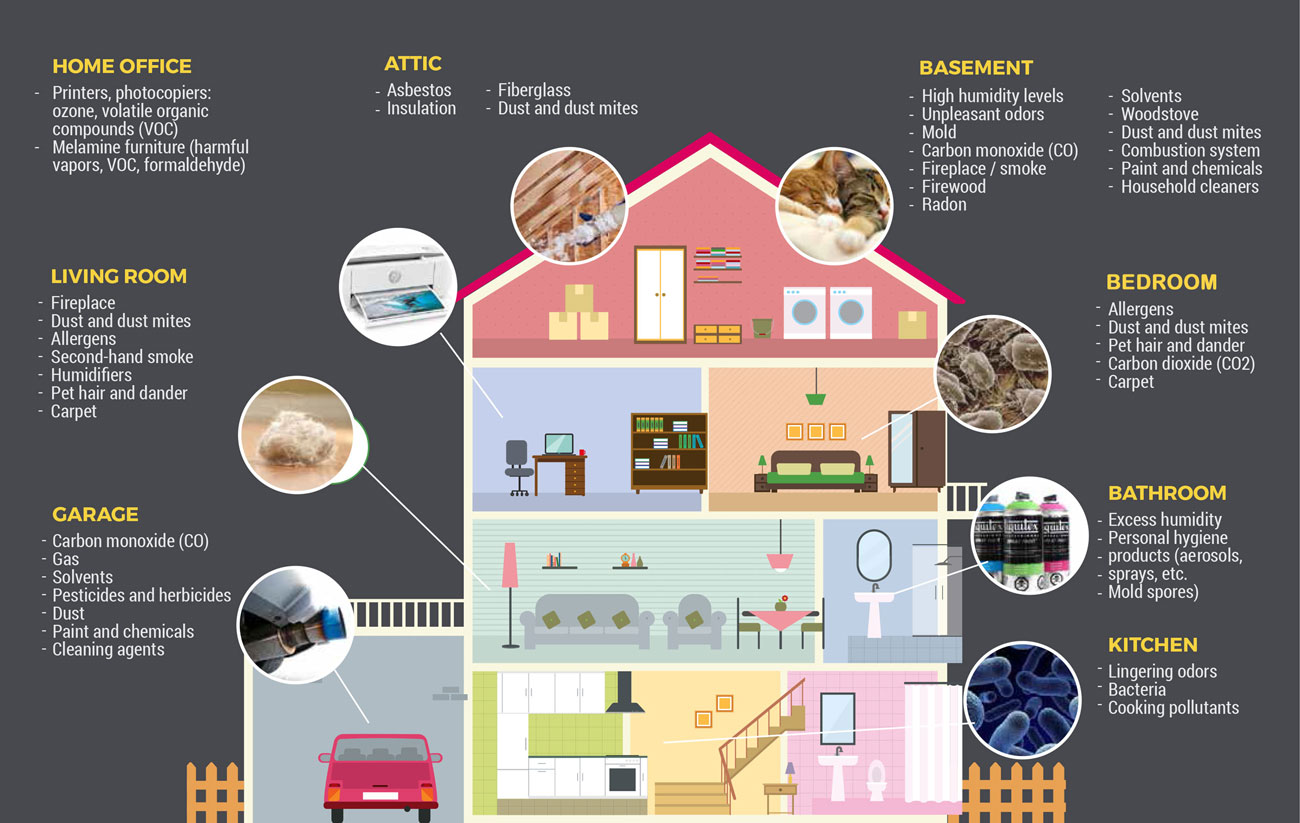 Indoor air pollution has become a more pressing concern in recent years due to the construction of more energy-efficient homes. These properties tend to be relatively airtight, meaning that the air inside can quickly become stagnant and pollutant levels rapidly rise.
Strokes and heart attacks impaired cognitive development for infants and fetuses however, there are many ways to reduce air pollution. For one, building owners can install indoor air quality (iaq) sensors to perform constant indoor air quality inspections. As the iaq sensors analyze these metrics, data funnels into a software program and alerts building managers as soon as levels become dangerous. Tracking air quality is also vital in construction settings. Iaq sensors measure and test for dust, fine particles from building materials, and toxic fumes. Many of these particles are extremely hazardous, so tracing and managing these levels helps reduce project liability exposure. https://storage.googleapis.com/q5m/moldremovalwilmingtonnc/index.html
3. Main Pollutants in Indoor Air Environment
Many factors contribute to poor indoor air quality. Indoor air includes pollutants that penetrate from the outdoors, as well as sources that are unique to the indoor environment. These sources involve:
human activities within buildings, such as smoking, burning solid fuels, cooking, and cleaning.
Vapors from building and construction materials, equipment, and furniture. Biological contaminants, such as mold, viruses, or allergens. Some contaminants are described below:.
Indoor pollution sources that release gases or particles into the air are the primary cause of indoor air quality problems. There are many sources of indoor air pollution – everything from building materials and household cleaner to biological pollutants such as dust mites and pet dander. Below are some of the most common indoor air pollutants with links to additional information for each.
Particulate matter (pm) is made up of liquid droplets and solid particles that are suspended in the air with different shapes, sizes, origins, and chemical compositions; various of them are hazardous (davidson et al. 2005 ; yadav and devi 2019 ). The pm is classified into four fractions based on its aerodynamic diameter: ultrafine (< 0. 01 μm), fine (0. 01–2. 5 μm), coarse (2. 5–10 μm), and large (10–100 μm) (chen et al. 2020 ; teiri et al. 2021 ). Globally, on an annual basis, fine and superfine (pm 2. 5) particles alone are causing over 2 million deaths (silva et al.
5. The Oxidative Capacity of Indoor Environment
Inhaled air pollutants are associated with allergic diseases and pulmonary diseases, such as asthma, atopic dermatitis, and allergic rhinitis. Moreover, smoking activity is regarded as one of the most important factors in the development of chronic inflammatory pulmonary diseases, including chronic obstructive pulmonary disease (copd), asthma, and lung cancer [ 143 ]. Maximal obtainment of lung function can be significantly affected by iap exposure; subsequently, lung function is declined. Noxious particles, including pm and co, may influence lung development starting in utero [ 144 ]. Copd diseases are featured by an enhanced chronic inflammatory response in the airways and the lung to toxic pm or indoor air pollutants.
Plants have the ability to absorb and catabolize toxic gases that exist in both indoor and outdoor environments. Potted plants significantly reduced indoor air pollutants via a variety of mechanisms, including pollutant transformation and localization by the external surfaces of leaves and the plant root-soil system (pettit et al. , 2018 ; manisalidis et al. 2020 ; moya et al. 2021 ). In previous studies, a number of plant species have been identified to absorb and metabolize vocs like benzene, xylene, and formaldehyde. The mitigation of indoor air pollution is supported by the combination of plant metabolic activity, plant growth medium, and associated microorganisms (aydogan and montoya 2011 ).
Listen to the article this article has been updated. More than 3 million people die every year due to indoor air pollution, according to the world health organization. It's a big problem in developing countries, where indoor burning of solid fuels like wood, coal and dung in developing countries releases harmful pollutants, including fine particulate matter and carbon monoxide, impacting air quality and human health. Launched at cop26 by the world economic forum, clean air fund and stockholm environment institute, the alliance for clean air unites business leaders to prioritize air quality, reduce emissions and drive meaningful action in the climate movement.
There are many potential sources of indoor air pollution. High levels of indoor air pollutants can impact your health. Some sources such as building materials and furnishings may release pollutants continuously. Other sources such as smoking or dust from construction release pollutants when they occur. Poor ventilation can lead to increases in indoor air pollution. Ventilation allows air to circulate, bringing in fresh air and diluting pollutants. Poor ventilation may be a result of poor quality hvac systems. Identifying and controlling common pollutants indoors can help minimize the effects of indoor air pollution.